
Table of Contents
ToggleWHAT IS PRINTING?
Printing is the process of producing text or images on paper or other materials using a printer. It allows digital content from computers or devices to be converted into a physical (hard copy) form, such as documents, photos, books, or posters.

TYPES OF PRINTING:
Woodblock Printing
This is one of the oldest printing methods. Text or images are carved on a wooden block, inked, and pressed onto paper. It was first used in ancient China for books and religious texts.Letterpress Printing
In this method, raised metal letters are arranged, inked, and pressed onto paper. It gives a clear and sharp impression and was widely used after Gutenberg’s invention of the printing press.Offset Printing
Offset printing uses metal plates to transfer ink onto a rubber sheet and then onto paper. It is commonly used for newspapers, books, magazines, and brochures because it produces high-quality prints in large quantities.Digital Printing
Digital printing prints directly from a computer file without plates. It is fast, cost-effective for small orders, and allows easy customization. It is used for posters, visiting cards, and photo printing.Screen Printing
In screen printing, ink is pushed through a mesh screen onto the surface. It is mainly used for printing on clothes, banners, posters, and plastic materials.Gravure Printing
Gravure printing uses engraved cylinders to transfer ink. It produces very high-quality images and is used for magazines, packaging, stamps, and currency printing.Flexography
Flexography uses flexible rubber or plastic plates. It is mainly used for packaging items like plastic bags, food wrappers, labels, and cartons.3D Printing
3D printing creates objects layer by layer using digital designs. It is used in healthcare, engineering, construction, and manufacturing to make tools, machine parts, and medical implants.
Each printing type has its own use, method, and advantage depending on the need.
PRTINTING STARTS FROM:
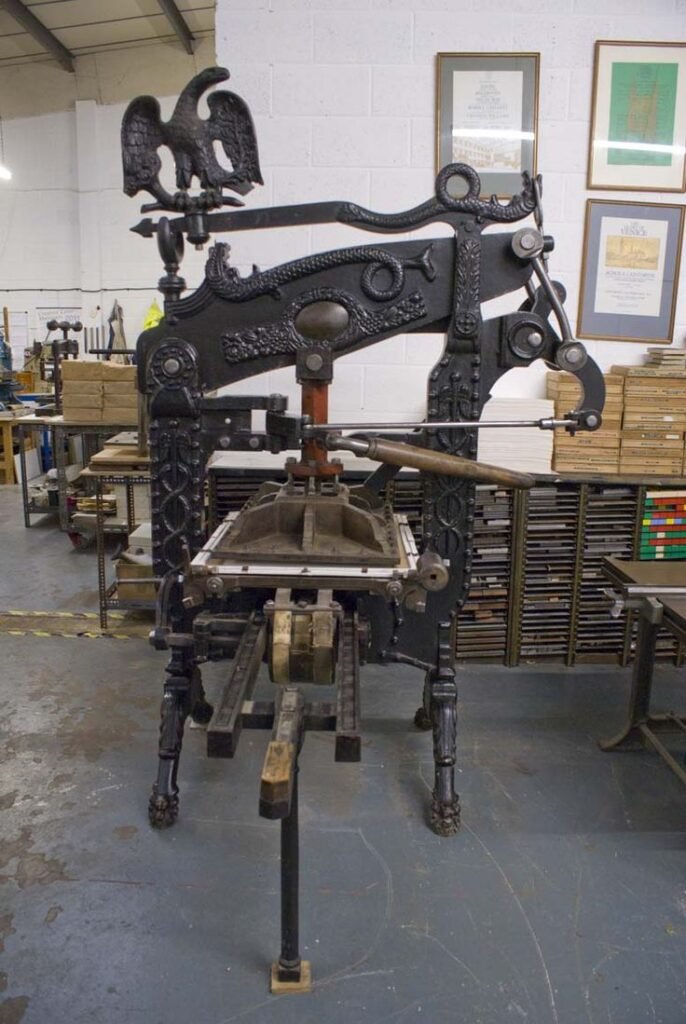
The origin of printing dates back to ancient China, where people first developed ways to reproduce text and images. Around 200–600 AD, woodblock printing was invented. In this method, entire pages were carved into wooden blocks, inked, and pressed onto paper. This technique was widely used for printing religious texts, calendars, and artworks.
In the 11th century, a Chinese inventor named Bi Sheng introduced movable type printing, where individual characters were made separately and reused. This made printing more flexible, though it was challenging because of the large number of Chinese characters.
Printing technology later spread to Korea and Japan, where metal movable type was developed. In Europe, printing began much later. Around 1440 AD, Johannes Gutenberg invented the printing press using metal movable type and a mechanical press. His invention made books cheaper, faster to produce, and accessible to many people.
The printing press played a major role in spreading education, knowledge, science, and ideas, leading to major changes such as the Renaissance and the spread of literacy worldwide.
HOW DOES IT WORK IN PRESENT IN CHINA?
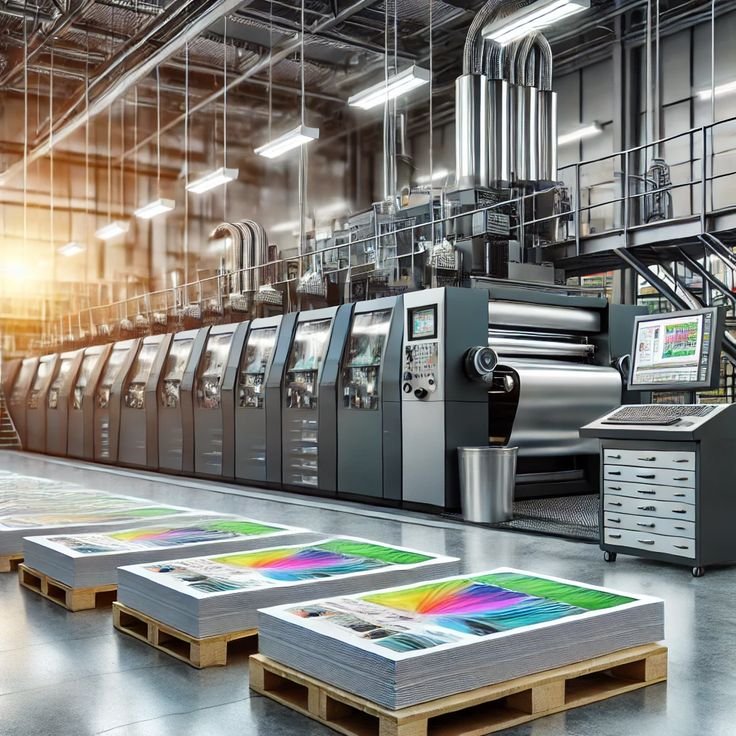
In modern China, printing works using advanced digital and automated technologies. Most printing is done through digital printing, offset printing, and 3D printing. Content is first designed on computers using software, then sent directly to high-speed printers. Large printing factories use automated machines for paper feeding, ink control, cutting, and binding.
China also uses eco-friendly inks, recycled paper, and smart printing systems. Online printing services are very common—people can order books, packaging, newspapers, and posters online, which are printed and delivered quickly. Today, China is one of the world’s largest and most modern printing industries, combining technology, speed, and mass production.
FUTURE IN PRINTING:
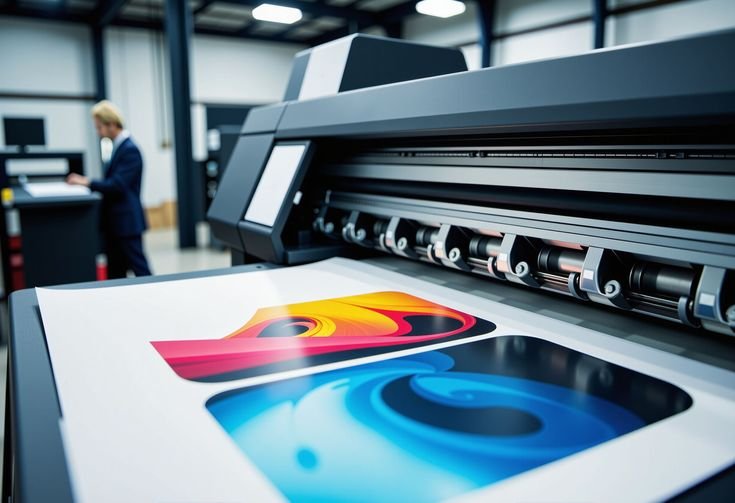
The future of printing is moving towards advanced technology, sustainability, and personalization. Traditional printing will continue, but it will be combined with digital systems and automation to improve efficiency and quality.
One major development is digital and on-demand printing, where materials are printed only when required. This reduces paper waste, storage costs, and overproduction. Personalized printing will become common, allowing customized books, packaging, labels, and advertisements for individual customers.
3D printing will play a big role in the future. It is already used to print medical implants, prosthetics, building parts, tools, and even food. In the future, entire houses and machines may be printed using 3D technology.
Artificial Intelligence (AI) and smart machines will control color accuracy, detect errors, and speed up production with minimal human effort. Printing will also become more environment-friendly, using biodegradable materials, recycled paper, and water-based inks.
Overall, the future of printing will be faster, smarter, greener, and more innovative, supporting industries, education, and everyday life in new ways.
Pingback: Difference between label printing and gravure printing. - Labelift
Pingback: Printing Companies in Meerut: - Labelift